Feb 2022 and Alex’s blog has been hijacked by mum, Vicky as he is busy with GCSE’s and OK, I’ve gone a bit hedge nerdy and need an outlet!
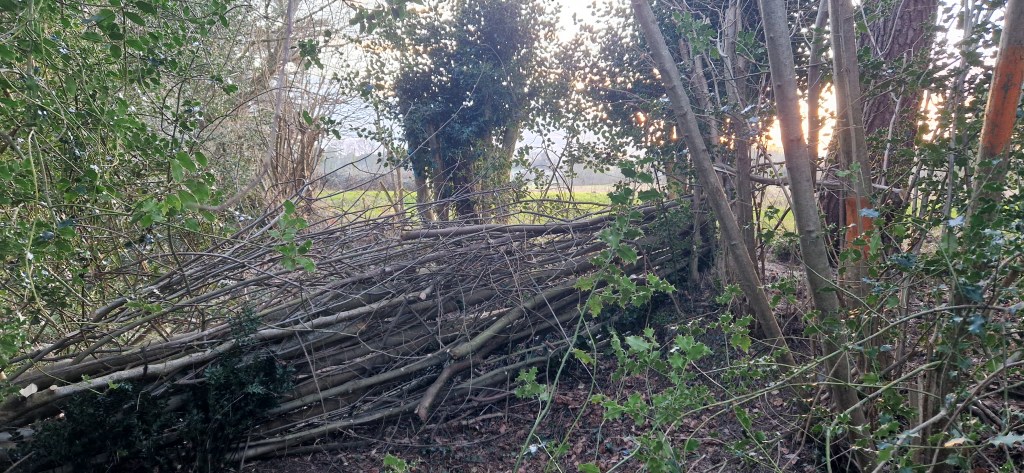
At an edge of the wood there is a section segmented by a seasonal gully which has many important plants and lots of dead wood (both standing and on the ground) so Alex and I started clearing all the fallen wood and making dead hedges/brash hedges with it to make a clear boundary line and to set a path to restrict plant damage in bluebells, early dog Violet, wood anemones and ramson season. This also means we can get in to admire it and pick some edibles. In one area we needed to block off a primary deer route as its been made so big that it would be an easy mistake for people to think its open access and further damage the area.
Alas there are also several dead trees (mostly Ash) so we’ve taken out the dangerous ones and will lower the height of the remaining so they won’t damage other trees when they come down and still provide a habitat for woodpeckers, bats and bugs until then.
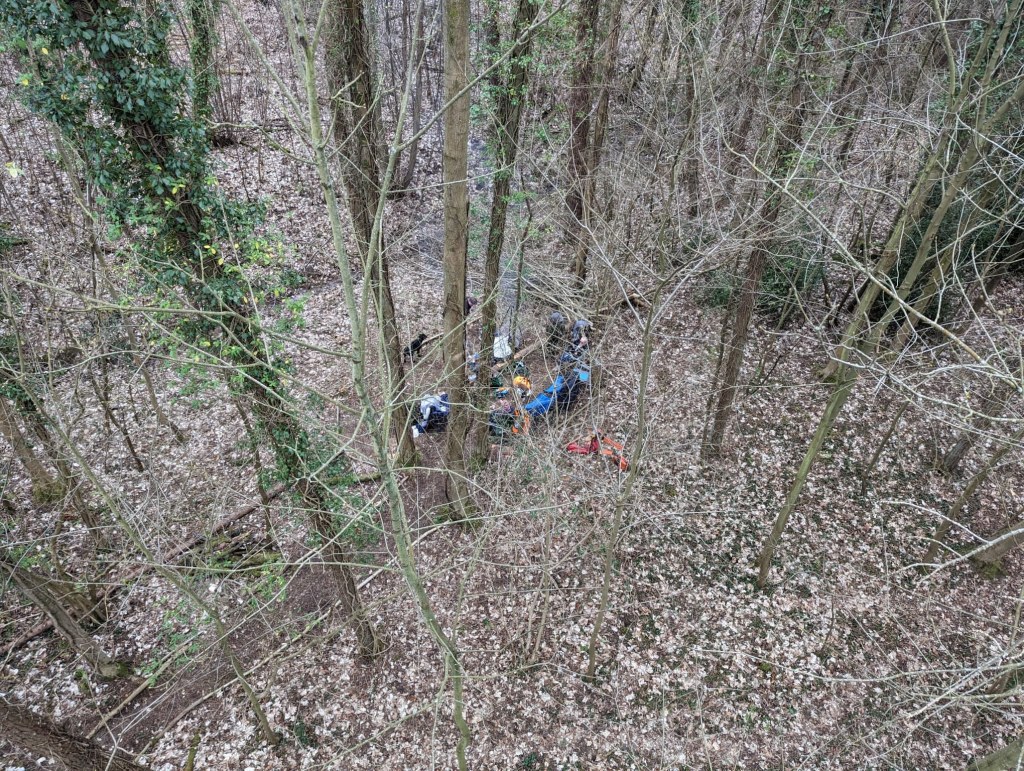
With the offer of sausages and cake we managed to bribe two groups of friends to help at weekends which really sped progress up. Thanks to Mike, Sally, Nicki, Karl, Gary, Holly, Nick, Rachel, Alex, Oscar, Will and dogs Cooper and Riley. Here’s the view from the top (luckily for us Mike is a arboriculturist).
“Dead wood is brilliant for all manner of wildlife. Fungi soften the wood through decay, and the larvae of beetles start chewing it up. They in turn provide food for woodpeckers, which make nest holes in the rotting wood. Meanwhile, holes that form where old broken branches have rotted provide crevices for bats and birds to roost.” Extract from the Wildlife Trusts
During clearing we’ve noticed some very spindly Hazel stands so have coppiced most of them leaving a few for shielding and interest. Be interested to see how these look in spring. I had literally not noticed how many there were everywhere… I couldn’t see the wood for the trees right?
“Wildlife that benefits from coppicing includes flowers like wood anemones, dog violets, st john’s wort, bluebells, butterflies and moths, bumblebees, dragonflies, slow worms, birds such as nightingales and chiffchaff, some species of bat, such as pipistrelles, dormice and other small mammals.” Extract from the Wildlife Trusts
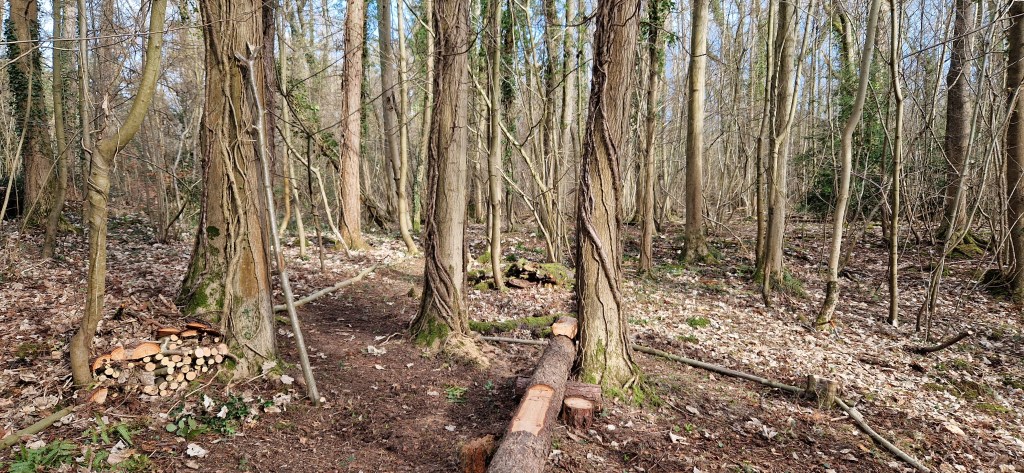
I used a dead tree to make a bench by cutting 3 flat areas out which makes a good food prep bench too.
 The Adventures of Alex